


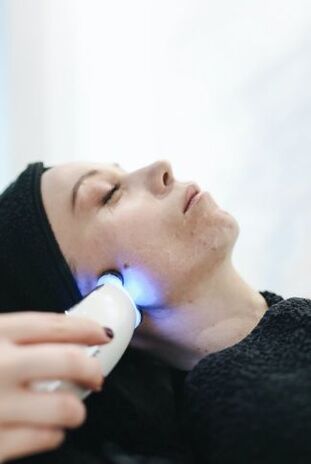
Laser resurfacing is a type of non-surgical cosmetic intervention.Facial tissues are polished with a laser beam.The skin becomes more elastic and healthy looking, wrinkles are smoothed.
What is the essence of the procedure?
The rejuvenating effect is achieved by laser exposure to the facial skin.The beam penetrates the epidermis to a depth of no more than 1 mm and destroys old dead cells.At the same time new cells are formed.
Different types of lasers are used when performing the procedure, including CO2, erbium and neodymium.
Types of laser resurfacing

Sanding
The most economical and skin-friendly method, suitable even for home use.Polishing is carried out using sapphire and erbium laser systems.Improves the contour of the face and helps fight acne.
Laser biorevitalization
With this method, the laser acts on the top layer of the skin and burns it.Additionally, hyaluronic acid is used.Fights visible signs of aging and deep wrinkles.
Fractional impact
The main beam is divided into many beams that overlap on the facing like a grid.As a result, an extensive effect occurs in different areas, while the tissues remain intact.Therefore, the skin recovers quickly after such a procedure.As a rule, the method is used to eliminate minor defects.
laser dermabrasion
Here not only rays are used, but also a flow of energy that causes microexplosions and evaporates the tissue.
Additionally, depending on the depth of the impact, the following types of rejuvenation are distinguished:

superficial
This peel only affects the top layer of the skin.It can reduce pigmentation and smooth texture.Thanks to its gentle composition, it is suitable even for sensitive skin around the eyes.
Half
Removes rough areas of the lower layer of the epidermis using fractional exposure or dermabrasion.
Deep
Thanks to its depth of penetration, it can eliminate serious cosmetic defects, eliminate scars, wrinkles and even out the complexion.
Furthermore, they highlight ablative and non-ablative Ways to use the laser.The ablative method is used when the skin is just beginning to age and lose its elasticity.The method is characterized by superficial grinding, which favors cell renewal.
For noticeable aging and age-related changes, a non-ablative method is recommended.The beam penetrates a distance of up to 5 mm, causing a regeneration process in the skin layers and the production of collagen.
The rejuvenation method should be chosen together with a cosmetologist, taking into account your skin type, health status and goals of the procedure.
Pros and cons of the procedure

Disadvantages of laser resurfacing:
- It does not remove all wrinkles.
- The effect is achieved through several procedures.
- pain
- Presence of contraindications.
- The skin takes a long time to recover.
- After the procedure it is necessary to avoid the sun.
- Expensive price in clinics for such a service (several sessions may be required to achieve the full effect)
- The effect is less lasting than with plastic surgery.
Benefits:
- Efficiency, helps solve many dermatological problems.
- Suitable for all skin types
- Sure if you follow the doctor's recommendations.
- Does not require surgery, an alternative to plastic surgery.
- It requires minimal recovery compared to plastic surgery.
- It does not leave serious scars or marks.
- A large number of skin areas can be treated in a single procedure.
- It allows you to rejuvenate sensitive areas such as the skin around the eyes and neckline.
- Easily and permanently eliminates cosmetic defects.
- The effect lasts up to five years.
Indications and contraindications.

Indications include signs of aging and age-related skin changes, facial wrinkles, presence of age spots and scars.The laser is effective in combating acne, the effects of acne, sagging skin, decreased skin tone, yellowish complexion, pronounced network of blood vessels and enlarged pores.It will help eliminate bags under the eyes and stretch marks.However, it should be borne in mind that laser rejuvenation is, in fact, an operation and it is best to resort to it when all other means to improve the condition of the skin have been tried.
Contraindications:
- oncology
- Diabetes mellitus
- heart problems
- Presence of colds and infectious diseases.
- Age (it is not recommended to use laser before the age of 18 and after the age of 60)
- cool tan
- Poor blood clotting
- Pregnancy, mental problems.
- Breastfeeding
- Varicose veins and hypertension.
- Predisposition to colloid scars.
- vitiligo
- Low immunity
- Skin diseases and rashes at the site of laser application.
- After completing a course of chemical peeling, laser resurfacing cannot be performed for two weeks.
How is the procedure performed?

First, the skin is cleansed by applying scrubs and scrubs to the face.Anesthesia is then administered to the patient.An anesthetic solution is applied to the skin.After this, the cosmetologist begins to treat the skin with a laser;The rays affect areas of the skin.Usually, the procedure is not very painful, only a slight tingling sensation is felt.At the end of the procedure, the skin is softened with a moisturizing composition.Rejuvenation is over, now the client must independently care for the skin for its quick restoration.Typically, a laser therapy session lasts about an hour, the time depending on the number of skin areas to be treated.
Possible side effects after the session:
- Redness and peeling of the skin.
- The appearance of dermatitis.
- The appearance of scars.
- burns
- Itching and swelling
- Painful tingling in the treated areas.
Post-procedure care
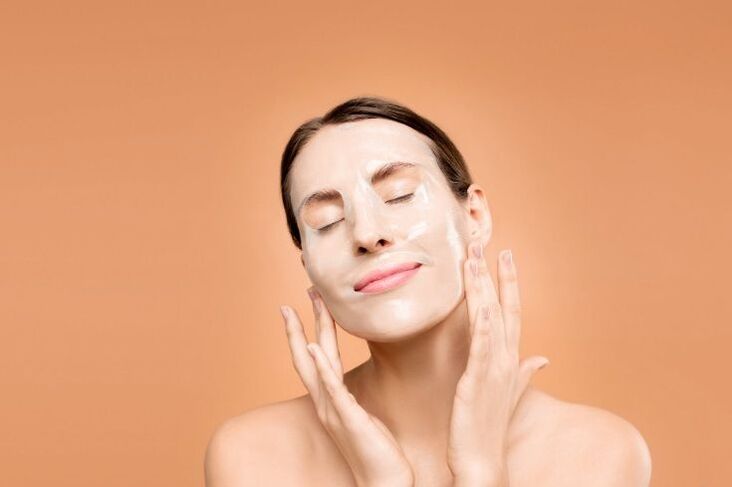
Painful sensations are allowed in the areas affected by the laser.The skin becomes red and may swell during the first few days.But you should not be afraid, since these phenomena are temporary and will soon disappear.To help your body recover, carefully monitor your diet and give up sweets and salty foods.Drink plenty of water, at least two liters a day.Do not take medications or hormonal drugs.On the second day after surgery, fluid appears in the tissues, which hardens and forms a scab.This scab should not be torn off to avoid infections of the damaged skin.Over time it will disappear on its own.Experts advise during this period to use protective and medicated facial creams to promote healing.
The skin will be completely restored and will acquire a normal appearance within a month.It will be necessary to continue protecting it strongly from sunlight, using sunscreen with a filter of at least SPF30.You cannot perform peelings or use scrubs, nor visit solariums, baths and saunas.
Result of laser rejuvenation.
Thanks to the laser, wrinkles are eliminated, stretch marks become invisible, the color and structure of the skin is improved, and pores are narrowed.Age spots and scars are also eliminated, and the vascular network disappears.The procedure relieves facial inflammation, gives the skin tone and a healthy appearance.